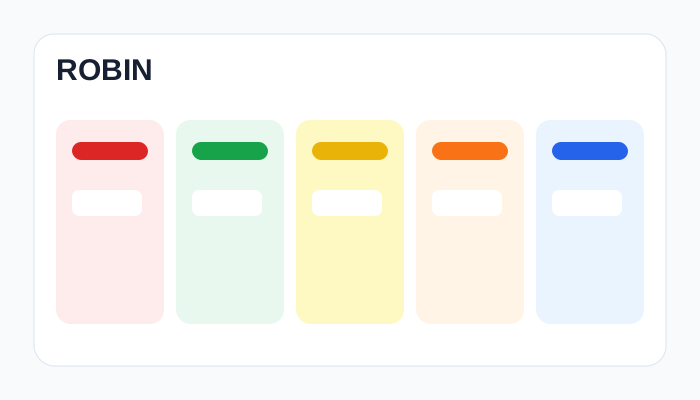
Complex work rarely fits into one list of positives and one list of problems. ROBIN gives the team five distinct lenses for sorting that complexity: Risks, Opportunities, Bright Spots, Improvements, and Next Steps, each with a clear job in the conversation. That last column draws a clean line from discussion to commitment.
Strategic reviews, cross-functional projects, and complicated delivery periods
What each column means
Use the prompts to keep cards specific. The examples show the level of detail that makes discussion and voting useful.
Risks
3
What could lower the chance of success in the next stage?
The vendor has not confirmed its timeline.
One person holds most of the knowledge.
Support volume may rise at launch, stretching the team's available capacity during the same period when release work also needs attention.
Opportunities
3
Which new option or advantage could the team use?
Bring the beta feedback group back in.
Automate the new validation rule so every request passes through the same check before the workflow accepts it.
Pair discovery work with support calls.
Bright Spots
3
Which evidence shows the team or system working well, and what changed in a way the group can see or measure?
Recovery time dropped after we added the runbook.
Smaller stories helped the work move from development through review with fewer long waits between one step and the next.
Design and engineering made the decision together.
Improvements
3
Which part of the current work needs a specific change?
Clarify ownership before kickoff.
Test migrations with realistic volume before the release reaches the stage where the team needs dependable timing and failure data.
Cut the time work spends waiting for review.
Next Steps
3
Which actions will the team commit to now, after it has compared the evidence and decided which themes deserve attention first?
Nora confirms the vendor date by Friday.
Sam runs a load test before planning, records the result, and brings the evidence into the next conversation about release readiness.
The team checks ownership at kickoff.
40–50 minutes agenda
A complete path from framing the room to assigning one concrete follow-up.
01
Frame the review
Name the sprint or project being reviewed, restate the purpose of each column, and remind everyone to describe observable events.
3 minutes
02
Write observations silently
Give everyone uninterrupted time to add one specific observation per card across every column.
7 minutes
03
Share and clarify
Read the cards column by column and let authors add context without debating solutions yet.
7 minutes
04
Group and vote
Combine cards that describe the same pattern, then vote for the themes that would most improve the next iteration.
5 minutes
05
Discuss the leading themes
Explore causes, consequences, and tradeoffs behind the highest-voted themes while making space for dissenting evidence.
10 minutes
06
Commit to one change
Turn the strongest insight into a small action with an owner, deadline, and signal the team can review next time.
5 minutes
Use this format when
The review spans strategic choices and day-to-day operations, giving people space to connect long-term direction with the details affecting delivery now.
People from several functions need one shared picture of the work.
The team wants its actions visible next to the observations that led to them.
Choose another format when
A short sprint retrospective needs three prompts.
Participants are likely to fill Next Steps before they discuss the evidence, which would turn the last column into a pile of early guesses.
One urgent issue deserves the entire meeting.
Facilitation tips
Keep Risks aimed at the future and Improvements tied to the current situation.
Keep Opportunities optional.
Ground Bright Spots in evidence so the team knows which strengths to protect.
Fill Next Steps after discussion.
Give every Next Step an owner and a date for review.
Useful variations
Product ROBIN
Focus Risks and Opportunities on customer outcomes and evidence, then bring market timing into the same view before the team chooses a Next Step.
Operational ROBIN
Review reliability, support, deployment, and signals from incident learning.
Portfolio ROBIN
Apply the five lenses across connected initiatives and their dependencies.
Before the retro
Recommended warm-up
This or That
Use a quick, low-pressure choice round before the retrospective begins.
What does ROBIN stand for when a team uses the format to review a complex stretch of work?
ROBIN stands for Risks, Opportunities, Bright Spots, Improvements, and Next Steps.
When should a team use ROBIN?
Choose ROBIN for complex or strategic work that needs a wide view and explicit commitments.
How are Risks different from Improvements?
Risks are possible future problems that could lower the chance of success during the next stage of work. Improvements change a practice or condition that exists today.
When should the team fill Next Steps?
Fill Next Steps after the team groups the cards, votes, and talks through the strongest themes. The column should contain commitments chosen from that discussion.
Related resources
Run this ROBIN Retrospective
Open the ready-made columns, invite the team, collect observations, vote, and leave with an owned improvement.