Use this format when
- The team wants to make a few direct changes to how it works.
- An earlier experiment has run long enough for the team to decide its next step.
- The retro needs a short list of practical actions.
When the team understands the problem but keeps circling the same options, Start Stop Continue gives the conversation somewhere to go. Each column asks for a decision about a behavior, meeting, or delivery practice.
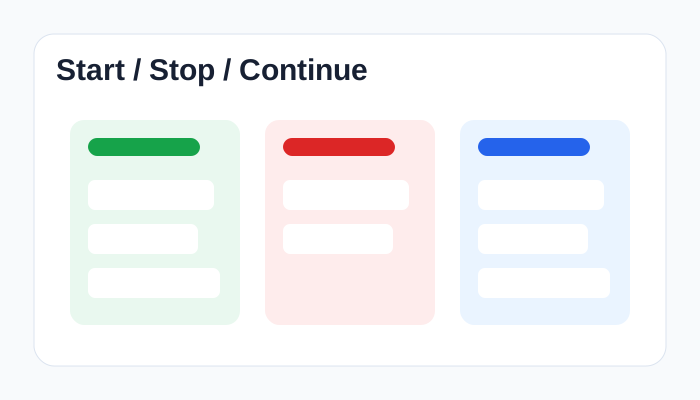
Use the prompts to keep cards specific. The examples show the level of detail that makes discussion and voting useful.
Which new behavior or practice would make the team's work easier?
Which habits create waste or confusion, and where could the team remove avoidable friction from its day?
Which practices already help the team and need deliberate protection in the next iteration?
A complete path from framing the room to assigning one concrete follow-up.
Name the sprint or project being reviewed, restate the purpose of each column, and remind everyone to describe observable events.
Give everyone uninterrupted time to add one specific observation per card across every column.
Read the cards column by column and let authors add context without debating solutions yet.
Combine cards that describe the same pattern, then vote for the themes that would most improve the next iteration.
Explore causes, consequences, and tradeoffs behind the highest-voted themes while making space for dissenting evidence.
Turn the strongest insight into a small action with an owner, deadline, and signal the team can review next time.
Ask each person to choose one working habit for themselves, then agree on one team action.
Keep every card focused on recurring meetings: who attends, how people prepare, and which decisions get made.
Use the three prompts for discovery, handoffs, quality checks, and the release flow.
Before the retro
Start Stop Continue is a three-column retrospective for deciding which practices to begin, remove, or preserve in the next iteration.
A useful card names a behavior the team controls. Examples include starting risk reviews earlier, stopping mid-sprint scope changes, and continuing with small pull requests.
Choose one or two changes, give each a clear owner, and leave enough room to follow through after the meeting. Long lists fade fast.
Set aside 30 to 40 minutes for a team of three to twelve. That covers silent writing, voting, discussion, and choosing an action.
Open the ready-made columns, invite the team, collect observations, vote, and leave with an owned improvement.