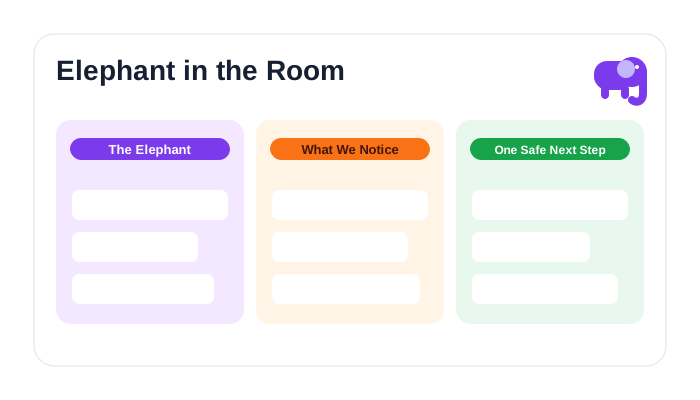
A tense issue can sit in every meeting without appearing in the notes. An Elephant in the Room retrospective template gives the team a careful way to name what people have been avoiding, connect it to work they can observe, and choose a next step that respects each person's boundaries.
Avoided team issues, repeated meeting tension, and problems that surface only after decisions are made
What each column means
Use the prompts to keep cards specific. The examples show the level of detail that makes discussion and voting useful.
The Elephant
3
Which issue, tension, or change is shaping the work even though the team has avoided discussing it directly?
We keep committing to the release date even though the remaining scope has grown each week.
The team has stopped challenging architecture decisions since ownership moved to one person.
Support and engineering leave handoff meetings with different ideas about who owns urgent customer issues.
What We Notice
3
Which event, delay, decision, or repeated behavior shows the effect this issue is having on the work or the team?
Three stories rolled into the next sprint after late scope changes, and nobody raised the deadline risk during planning.
Two design concerns arrived in private messages after the review had ended.
A priority support case waited four hours while both teams assumed the other group was responding.
One Safe Next Step
3
Which small action, question, boundary, or source of support would let the team address the issue without asking anyone to disclose more than they choose?
Ask the product owner to choose which two release items can move before the next planning session.
Collect written concerns before architecture reviews and have the decision owner respond to each theme.
Publish one escalation owner for urgent customer cases and review the first week of handoffs next Friday.
45 to 55 minutes agenda
A complete path from framing the room to assigning one concrete follow-up.
01
Set the boundaries
Name the period under review and explain the three columns. Give everyone permission to pass, state who can see card authors, and identify any topics that belong in a private or formal process.
5 minutes
02
Write quietly
Ask each person to write specific observations without discussion. Keep one issue or event on each card, and leave names or personality labels off the board.
8 minutes
03
Reveal and clarify
Read the cards one column at a time. Invite brief context, allow an author to decline, and pause any card that needs a safer setting.
8 minutes
04
Connect issue and impact
Group cards that describe the same pattern. Link each Elephant to the events under What We Notice so the discussion stays grounded in evidence from the reviewed period.
8 minutes
05
Choose a safe focus
Check which theme the team is ready and able to address together. Use a private confidence check or vote when speaking first could put pressure on participants.
6 minutes
06
Agree on one next step
Choose one small action with an owner, a date, and a signal the team can review. Record where a separate conversation is needed and who is responsible for arranging it.
10 minutes
Use this format when
The same concern appears in private messages or hallway conversations but disappears from team meetings.
A deadline, ownership change, or decision has created tension that is affecting delivery.
People agree quickly in the room, then raise important objections after the decision has closed.
The team has enough trust to discuss a shared pattern and a facilitator can protect clear participation boundaries.
Choose another format when
A report of harassment, discrimination, retaliation, or misconduct needs the organization's formal and confidential process.
A power imbalance makes an open group conversation unsafe for the people affected.
The facilitator cannot explain who will see cards, authors, recordings, or exported notes.
The issue is an active interpersonal conflict that needs a private conversation or a skilled independent moderator.
Facilitation tips
Give people a real right to pass. Silence may be a boundary, so never ask someone to explain why they chose it.
Explain exactly what the board, meeting, and follow-up notes reveal. Confirm the current settings before describing any contribution as anonymous.
Ask for events, decisions, and effects. Rewrite labels about a person as the behavior or system the team observed.
Keep leaders from answering first. Their interpretation can narrow what other people feel able to add.
Watch for a card that belongs in a private or formal process. Pause it without asking the author to share more in front of the group.
Close with a step the team can see and review, then tell everyone where the notes will live and who can access them.
Useful variations
One-elephant session
Bring one already-known issue to the board. Spend the writing time gathering its effects and possible next steps instead of asking the team to identify another topic.
Decision-room review
Use the three prompts after an important decision. Look for concerns that stayed outside the meeting, their effect, and one change to the next decision process.
Facilitator-held collection
Let a trusted facilitator collect themes before the session, remove identifying detail with each contributor's agreement, and present only the topics participants approved for group discussion.
Before the retro
Recommended warm-up
This or That
Use a quick, low-pressure choice round before the retrospective begins.
It is a team reflection for an issue that affects the work but rarely gets discussed directly. The format separates the issue, observable evidence of its impact, and a next step the team feels ready to take.
What are the Elephant in the Room retrospective columns?
The Elephant names the avoided issue, What We Notice records its effect on the work, and One Safe Next Step captures a small action, question, boundary, or source of support.
Should Elephant in the Room retrospective cards be anonymous?
Anonymous writing can reduce pressure when the board and meeting setup support it. Check the current author visibility and access settings first, then tell participants exactly what will be visible before they add a card.
How can a facilitator keep this retrospective psychologically safe?
Let people pass, keep personal labels off the board, ask for observable events, and move sensitive individual matters into an appropriate private process. Leaders should listen before offering their interpretation.
When should a team avoid this retrospective?
Skip the group format when a power imbalance makes participation unsafe or when harassment, discrimination, retaliation, misconduct, or an active personal conflict requires a confidential process or skilled independent support.
Related resources
Run this Elephant in the Room retrospective
Open the three ready-made columns, set clear boundaries, collect the evidence, and agree on one next step the team can review.