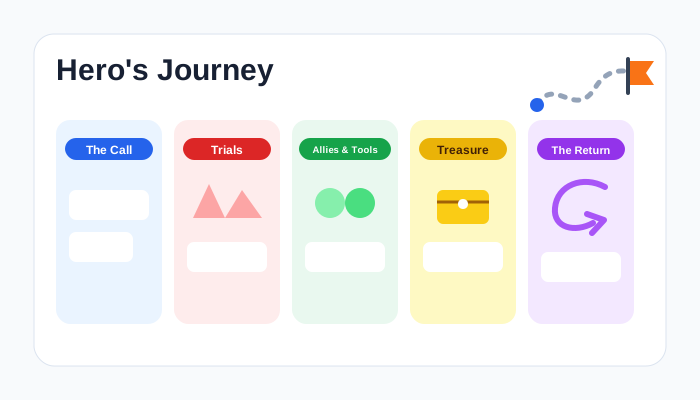
A sprint can end as a pile of tickets, decisions, setbacks, and small wins that never quite connect. A Hero's Journey retrospective template puts those events in order so the team can see what called it into the work, where the path became difficult, who or what helped, what it gained, and what should change next.
Milestone reviews, demanding sprints, long projects, and teams that need to connect scattered events
What each column means
Use the prompts to keep cards specific. The examples show the level of detail that makes discussion and voting useful.
The Call
3
Which goal, problem, or change set this work in motion, and what did the team believe it needed to accomplish?
Move the first twenty customers from the old billing flow without interrupting renewals.
Replace the fragile deployment step that had caused two rollbacks during the previous release.
Learn whether new users could finish onboarding without help from Support.
Trials
3
Where did the path become difficult, uncertain, or costly during the period under review?
The vendor sandbox failed whenever we tested a renewal with more than one subscription.
A late pricing decision forced the team to rebuild the checkout summary after development had started.
Only one engineer knew how to trace failures across the old and new billing services.
Allies & Tools
3
Which person, practice, skill, tool, or source of evidence helped the team move through a trial?
Support brought five real renewal cases into refinement before the second implementation pass.
Pairing with the platform engineer helped us build a repeatable trace across both services.
The release checklist caught a missing rollback step while there was still time to rehearse it.
Treasure
3
Which result, insight, or new capability did the team gain and want to carry forward?
The team can now diagnose a failed renewal from one trace instead of searching three logs.
Testing real customer cases before coding exposed the rules that our written requirements had missed.
Two more engineers can run and reverse the billing migration without waiting for its original author.
The Return
3
Which specific change will bring that learning back into the next sprint, release, or project stage?
Add one recent Support case to every billing refinement session, starting next Tuesday.
Run a recovery drill with the on-call engineer before the next migration batch.
Give the release checklist one owner and review it twenty-four hours before deployment.
50–60 minutes agenda
A complete path from framing the room to assigning one concrete follow-up.
01
Name the journey
Set the start and end of the period under review. Name the team as the shared hero, explain each story stage, and keep individual performance judgments off the board.
5 minutes
02
Write the chapters quietly
Give everyone quiet time to write across all five columns. Ask for one event, source of help, result, or proposed change on each card.
10 minutes
03
Tell the story in order
Move from The Call through The Return. Let authors add brief context, place events in sequence where useful, and hold the solution discussion until the whole journey is visible.
12 minutes
04
Find the turning points
Group cards that describe the same event or pattern. Connect each useful ally or tool to a trial, then link the strongest treasure cards to the evidence that produced them.
8 minutes
05
Choose what matters next
Vote for the turning point with the most useful lesson for the next stage. Discuss what made the difference and which part remains within the team's influence.
12 minutes
06
Bring one lesson home
Turn one Return card into a small action with an owner, a date, and a signal the team can check. Record which Treasure practice the action is meant to protect or repeat.
8 minutes
Use this format when
A long project or demanding sprint contains several events that make more sense when the team puts them in sequence.
The team has reached a release, migration, launch, or other milestone and wants to capture what changed along the way.
Useful support from another person, practice, or tool deserves a clear place in the review.
A familiar positive-and-negative retrospective has started producing disconnected cards with little shared context.
Choose another format when
A short weekly process check needs a faster format with fewer prompts.
An incident requires a factual timeline, impact analysis, and a dedicated blameless review.
An active interpersonal conflict needs direct language and a facilitator who can protect the people involved.
The story metaphor would make it harder for the group to speak plainly about the work.
Facilitation tips
Treat the team as one hero. The board should examine shared work instead of ranking individual contributions.
Set clear dates around the journey before writing starts. This keeps old history from swallowing the session.
Ask for a concrete event behind each Trial and Treasure card. A story still needs evidence.
Connect Allies & Tools to the difficulty they helped resolve. This shows which support the team should preserve or request again.
Let the metaphor loosen the conversation, then translate each Return card into plain language before voting.
Choose one action small enough to review at the next retrospective, and name the signal that would show a useful change.
Useful variations
Milestone story
Use one release or project milestone as the full journey. Put key decisions in sequence and focus The Return on the next stage of the same work.
Chapter map
Run the format across several sprints. Label cards by sprint so the team can see when a Trial began and which Ally or Tool changed the path.
Quiet journey
Collect cards before the meeting and reveal each column together. Use the live session for turning points, voting, and one Return action.
Before the retro
Recommended warm-up
This or That
Use a quick, low-pressure choice round before the retrospective begins.
It is a story-based retrospective that follows a team through the goal that started the work, the difficulties it met, the support it used, the learning it gained, and the change it will take into the next stage.
What are the Hero's Journey retrospective columns?
The five columns are The Call, Trials, Allies & Tools, Treasure, and The Return. Together they connect the starting challenge, difficult events, useful support, gains, and the next action.
Who is the hero in this retrospective?
Treat the team as the shared hero. That choice keeps the session focused on collective work, system conditions, and support instead of turning it into a contest between teammates.
How is Hero's Journey different from a Superhero retrospective?
Hero's Journey puts events in a story from the starting challenge to a lesson carried forward. Superhero groups observations by strengths, vulnerabilities, recurring obstacles, and support needs.
How long should a Hero's Journey retrospective take?
Plan for 50 to 60 minutes with four to twelve people. A milestone covering several sprints may need cards collected before the meeting so the live discussion can focus on turning points and action.
Related resources
Run this Hero's Journey retrospective
Open the five ready-made chapters, map the turning points, and bring one useful lesson into the team's next stage of work.