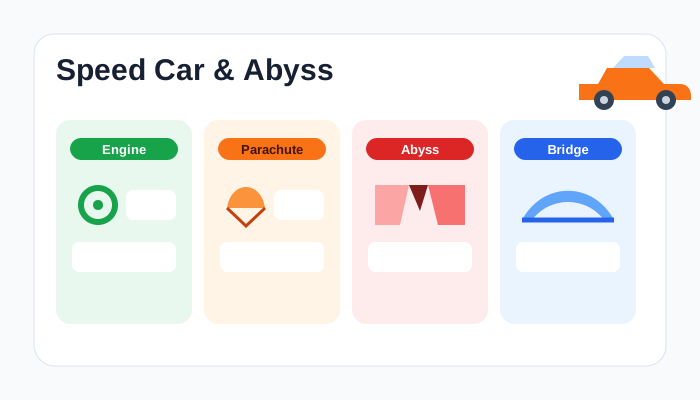
The Speed Car and Abyss retrospective template combines a look back with a hard look at what comes next. Engine captures momentum from recent work, Parachute shows the drag, Abyss names a credible danger ahead, and Bridge collects the steps that could keep the team on course.
Release readiness, fast-moving work, and risks that need preventive action
What each column means
Use the prompts to keep cards specific. The examples show the level of detail that makes discussion and voting useful.
Engine
3
Which practices, decisions, or conditions gave the team momentum during the period under review?
Smaller pull requests kept review moving throughout the sprint.
The product demo settled the acceptance criteria before implementation began.
Pairing on the migration spread enough context for two people to diagnose failures without waiting for the original author.
Parachute
3
What slowed the team down, created drag, or consumed effort without moving the work closer to its goal?
Three unplanned support requests broke up the time set aside for the migration.
Review work waited with one teammate near the end of the sprint.
The team rebuilt test data by hand each time the shared environment was reset.
Abyss
3
Which specific risk ahead could derail the next sprint, release, or milestone if the team leaves it alone?
The database migration has no tested rollback path before launch.
One person holds the knowledge needed to recover the payment service.
The release depends on a security review that has no confirmed date or owner.
Bridge
3
Which action, decision, or source of support would reduce the leading risk enough for the team to cross it safely?
Rehearse the rollback with production-sized data before the release review.
Pair a second engineer through one payment-service recovery drill this week.
Book the security review today and agree on a fallback scope if the review slips.
45–50 minutes agenda
A complete path from framing the room to assigning one concrete follow-up.
01
Draw the road ahead
Name the sprint or milestone under review and the next destination. Explain that Engine and Parachute look back, while Abyss and Bridge look ahead.
5 minutes
02
Write across all four areas
Give everyone quiet time to add one observation per card. Ask for evidence from recent work in Engine and Parachute, then a concrete future risk and response in Abyss and Bridge.
8 minutes
03
Read the Engine and Parachute
Share the recent evidence, group cards that describe the same force, and clarify what effect each item had on the work.
8 minutes
04
Map the Abyss
Read the risks aloud and sharpen vague cards into credible events. Vote for the risk with the greatest combination of impact and urgency.
8 minutes
05
Build the Bridge
Connect Bridge cards to the leading Abyss. Use an Engine strength when it helps, then choose a small preventive step the team can carry out before the risk arrives.
12 minutes
06
Name the driver
Give the chosen bridge step one owner, a due date, and a signal that will show whether the risk has fallen. Record where the team will review it.
5 minutes
Use this format when
A release or milestone is approaching and the team needs to pair reflection with risk planning.
The work is moving quickly enough that a hidden dependency or recovery gap could become expensive.
The same source of drag keeps appearing, and the team needs to connect it to the danger ahead.
The team wants a sharper, risk-focused alternative to a familiar positive-and-negative retrospective.
Choose another format when
An incident needs a factual timeline, impact analysis, and a blameless review.
The group has no shared destination for the next period, which leaves the Abyss without enough context.
An active conflict needs direct language and a facilitator who can protect the people involved.
Facilitation tips
Draw a clear line between recent evidence and future risk. Engine and Parachute describe what happened, while Abyss and Bridge prepare for what could happen next.
Ask what would make an Abyss risk real, when it could arrive, and which part of the goal it threatens.
Keep teammates out of the Abyss. Name the dependency, missing capability, decision, or system condition instead.
Match every Bridge card to a named risk. Generic improvements can move to the parking lot for another conversation.
Use one Engine strength when building the response. A practice the team already trusts may make the bridge easier to complete.
Close with one owned preventive action and a review point before the risk is due to arrive.
Useful variations
Release road test
Set the release as the destination. Fill Abyss with readiness and recovery risks, then build each Bridge from a check, rehearsal, decision, or fallback plan.
Two-lap Speed Car
Run Engine and Parachute after a sprint. Revisit Abyss and Bridge during planning so the chosen response becomes visible work.
Async risk scan
Collect Engine, Parachute, and Abyss cards before the meeting. Use the live session to compare risks and design the Bridge together.
Before the retro
Recommended warm-up
This or That
Use a quick, low-pressure choice round before the retrospective begins.
It is a retrospective and futurespective built around four parts of a road metaphor. Engine and Parachute examine recent momentum and drag. Abyss and Bridge surface a future risk and the response that could reduce it.
What are the Speed Car and Abyss retrospective columns?
The four columns are Engine, Parachute, Abyss, and Bridge. They cover momentum, drag, danger ahead, and the actions or support that could help the team cross safely.
What belongs in the Abyss column?
Add a specific, credible risk that could derail the next sprint, release, or milestone. A missing rollback plan, concentrated operational knowledge, or an unconfirmed dependency gives the team something concrete to assess.
How is Speed Car and Abyss different from Sailboat?
Both formats explore momentum, drag, and risk. Speed Car and Abyss puts extra weight on connecting one serious danger to a preventive Bridge, while Sailboat also asks the team to define its shared destination.
How long should a Speed Car and Abyss retrospective take?
Plan for 45–50 minutes with four to twelve people. The team needs enough time to review recent forces, compare future risks, and give one preventive action a clear owner.
Related resources
Run this Speed Car and Abyss retrospective
Open the four ready-made areas, compare the forces on the team, and build one owned bridge across the biggest risk ahead.