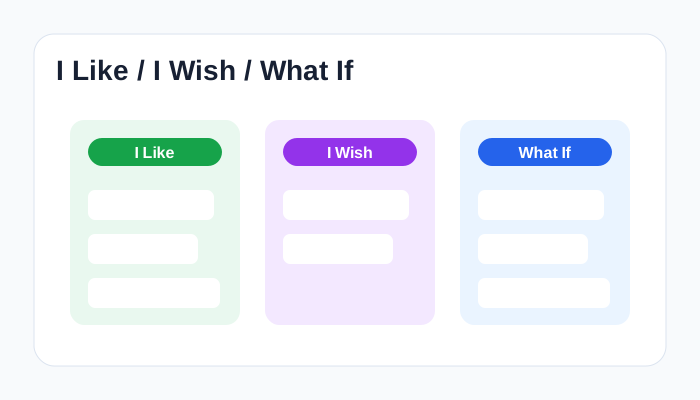
A team can see the same sprint from very different angles. I Like gathers the moments worth keeping, I Wish makes room for unmet needs, and What If invites ideas that are still rough enough to test. The result is a balanced conversation with a clear path from experience to action.
Balanced sprint reviews, product discovery, and teams that want constructive language for change
What each column means
Use the prompts to keep cards specific. The examples show the level of detail that makes discussion and voting useful.
I Like
3
Which moment, decision, or team practice helped during the period under review and deserves to continue?
I like that we demoed unfinished work while there was still time to use the feedback.
I like how pairing helped us trace the checkout failure before it reached production.
I like that Support joined refinement and brought three recent customer examples into the discussion.
I Wish
3
Which condition, support, or working habit do you wish had been different?
I wish acceptance criteria covered empty and error states before implementation began.
I wish we had protected two focus blocks during the migration instead of filling the week with status meetings.
I wish every cross-team dependency had one named owner and a date for the next decision.
What If
3
Which small experiment or question could move the team toward a wish during the next sprint?
What if we reviewed one risky story with Support before sprint planning?
What if the release owner posted a short readiness check twenty-four hours before deployment?
What if we tried one meeting-free afternoon and checked whether blocked work or response time changed?
35–45 minutes agenda
A complete path from framing the room to assigning one concrete follow-up.
01
Set the frame
Name the sprint, release, or project stage under review. Explain that I Like covers observed strengths, I Wish names a desired change, and What If holds possible experiments.
3 minutes
02
Write quietly
Give everyone seven quiet minutes to add cards across all three columns. Ask for one specific moment, need, or idea on each card.
7 minutes
03
Share and clarify
Read the cards one column at a time. Let each author add brief context, and hold the longer solution discussion until the team has seen the full board.
7 minutes
04
Connect likes, wishes, and ideas
Group cards that describe the same theme. Look for a useful practice in I Like that could support a wish or a What If experiment.
5 minutes
05
Vote and discuss
Vote for the themes that would make the biggest difference during the next period of work. Discuss the evidence behind the leading wish and the smallest useful experiment.
12 minutes
06
Choose one experiment
Turn one What If card into an action with an owner, a review date, and a signal the team can observe. Name one I Like practice to protect while the experiment runs.
5 minutes
Use this format when
A team wants a balanced review that starts with useful work and still creates room for change.
People have needs or suggestions that are easier to raise through constructive first-person prompts.
A product or discovery team wants to move from recent evidence into a small experiment.
A familiar positive-and-negative format has started producing the same answers each sprint.
Choose another format when
A serious incident needs a factual timeline, impact analysis, and a dedicated blameless review.
An active conflict needs direct language and a moderator who can protect the people involved.
The team already knows the decision it must make and needs a short action-planning session.
Facilitation tips
Ask people to finish each card with a concrete event, behavior, or result. A card such as "I liked communication" needs one example before the group can learn from it.
Keep I Wish focused on a condition or behavior the team can discuss. Rewrite personal judgments as an observable event.
Let What If ideas stay rough during writing. Test their cost, ownership, and expected signal after the team chooses a theme.
Look for useful links across columns. A practice the team likes may already contain part of the answer to a wish.
Choose one experiment and check it at the next retrospective. Keep the remaining ideas on the board as context.
Useful variations
I Like, I Wish
Use the first two prompts for a short review when the team already has a separate action-planning step.
Product feedback
Review one feature or customer journey. Put evidence under I Like, unmet needs under I Wish, and test ideas under What If.
Async collection
Collect cards before the meeting and reveal them together. Use the live session for grouping, voting, and shaping one experiment.
Before the retro
Recommended warm-up
This or That
Use a quick, low-pressure choice round before the retrospective begins.
It is a three-prompt retrospective that separates useful parts of recent work, desired changes, and possible experiments. The team reviews evidence first and then chooses one idea to test.
What should go in the What If column?
Add a question or small experiment that could move the team toward a wish. A strong card is specific enough to try, assign, and review after one sprint.
Can I use an I Like, I Wish retrospective template without What If?
Yes. The two-column version works for a short feedback session or when action planning happens elsewhere. Add What If when the team needs space to generate and compare possible responses.
How long should this retrospective take?
Plan for 35 to 45 minutes with three to twelve people. Collecting cards before the meeting can leave more time for discussion and choosing an experiment.
How do you stop wishes from becoming vague complaints?
Ask which event or missing condition led to the wish. Then rewrite the card around something the team observed and can influence, such as unclear ownership or late acceptance criteria.
Related resources
Run this I Like, I Wish, What If retrospective
Open the three ready-made columns, collect specific observations, choose one wish, and shape one experiment the team can review next time.